

























BY JOY OFASIA

The official handover of the Naha Birthing and Urban Health Centre yesterday has highlighted the Australian Prime Minister Anthony Albanese’s visit to Solomon Islands as the two countries reaffirm their longstanding partnership and commitment to improving healthcare and development outcomes.
In his speech at the handover ceremony Prime Minister of Australia Anthony Albanese said the handing over of the birthing centre shows the trust of its future to the Ministry of Health and Medical Services and the Honiara City Council and also paying tribute to the dedication and hard work of everyone.
“We will be of course handing over and trusting its future to the Ministry of Health and Medical Services and the Ponyarra City Council. In doing so we pay tribute to the dedication, the skill and hard work of everyone who has helped turn a remarkable vision into a transformative reality,” he said.
Albanese said the centre celebrates the partnership between the two nations and its people. “This centre, I can’t think of a better way to celebrate the partnership between our citizens and our nations and by opening a health centre that will make such an enormous difference.

This place is literally a concrete example of what we can achieve together, Australia and the Solomon,” the Australian Prime Minister said. The visit underscores the close bilateral relationship between Australia and Solomon Islands, with both countries continuing to work together across health, infrastructure, economic development, security and regional cooperation.
The official handover of the Naha Birthing and Urban Health Centre is expected to serve as a lasting symbol of the partnership between Australia and Solomon Islands, reflecting their shared commitment to strengthening essential public services and supporting the wellbeing of Solomon Islanders.

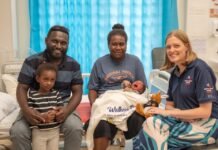
The Naha Birthing and Urban Health Centre, a significant health infrastructure project aimed at enhancing maternal, newborn and primary healthcare services for residents of Honiara and surrounding communities. The facility is expected to improve access to quality healthcare, ease pressure on existing health services, and contribute to better health outcomes for mothers and infants.