










BY EMMANUELLE MANGALLE – FREELANCER
In this modern day and age, where young Solomon Islanders are now often lost in the glow of their smartphone screens, scrolling endlessly through TikTok, Facebook, and other social media platforms, it is our responsibility to share stories that matter. Stories of grit, grace, and humanity. Stories that remind us of who we are and what we can become as Solomon Islanders.
As Solomon Islanders, we must celebrate our own heroes, those who rise before dawn, travel treacherous waters, hike across mountains, valleys, and rivers, and work tirelessly in remote corners of our scattered islands. These are the men and women who save lives, uphold justice, protect and conserve our environment, and serve communities that many have never heard of. Their stories deserve to be told.
Some of our fellow citizens carry extraordinary tales, tales that can ignite the dreams of our next generation. Let us continue to honor those who walk among us and are quietly shaping our country’s future at the last frontiers.
I had the humble pleasure of meeting one of our extra-ordinary citizens over the weekend who was kind enough to have a brief tok-stori with me at the Ocean View Lodge overlooking the turquoise waters of Gizo, with Kolombangara Island in the backdrop.
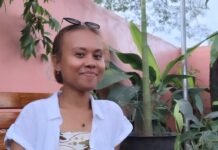
Dr. Lillian Navala, who hails from Nautabu and Vure villages in Northeast Choiseul, is a medical doctor. She is responsible for the Sasamunga Area Health Center in South Choiseul and had rushed a patient on an emergency trip to Gizo Hospital, Western Province.
The Sasamunga Area Health Center, which is quite far from Taro Provincial Hospital in the northwest region of Choiseul, has a total of eight nurses; five of whom are registered nurses (RNs), while three are yet to be certified. Together with Dr. Navala, they care for more than 6,000 people in the South Choiseul region. Some of the catchment areas require sick patients to travel for hours by foot or boat to reach the health centre for treatment.
Dr. Navala’s medical career has been a lifelong dream since her primary school days.
“I always wrote in my diary that I wanted to become a medical doctor,” she said.
The defining moment that reinforced her childhood dream occurred when she was a Form 2 student at Betikama Adventist College (BAC) in Guadalcanal.
Her late father was admitted to the National Referral Hospital (NRH) in Honiara after he was overdosed with medication for arthritis.
“My late dad had arthritis. One day, he was overdosed. He became so weak and was unconscious. We rushed him to NRH. He was admitted for a week until he recovered,” Dr. Navala recalled.
“Such moments can either break or motivate us. It’s what makes us human, to question our own frailty. In moments of despair, we sometimes question medical science and even look introspectively to our religious faiths,” she philosophized.
She continued, “That was a defining moment for me as a high school student. It reinforced my childhood dream of becoming a medical doctor. Seeing my father’s pain and then his smiles afterward sparked a profound conviction to pursue my medical career.”
Dr. Lillian’s father eventually passed away due to an acute chronic condition in the village three years ago. But he lived to see his daughter achieve her dream of becoming a doctor. Only fortunate parents live to witness their children’s achievements and determination.
After finishing high school at BAC, Dr. Lillian pursued nursing studies at Pacific Adventist University (PAU) in Papua New Guinea. She graduated as a registered nurse and had a short stint in the Obstetrics and Gynaecology Ward at Port Moresby General Hospital.
She returned to the country in 2015 and worked at Rafufu Rural Health Center in West Kwaio, Malaita Province for a year. She was then attached to the NRH’s Obstetrics and Gynaecology Ward in 2016.
While working as a registered nurse, Dr. Lillian remained ambitious to pursue further medical studies.
“I thought that if I was a doctor, I could do more to help people” she said.
Her strong determination led her to apply for a scholarship to study medicine at I-Shou University School of Medicine for International Students in Taiwan in 2016. She then studied in Taiwan for four years.
She was one of 125 Solomon Island students who remained in Taiwan when the Solomon Islands switched diplomatic ties to Beijing, China in September 2019.
Dr. Lillian said it was an uncertain time for many of them. Fortunately, their scholarships continued despite the geopolitical tensions.
Since arriving at Sasamunga Area Health Center earlier this year, Dr. Lillian has accompanied four patients to Gizo Hospital across the treacherous waters between Choiseul and Western Province. The journey by 60-horsepower outboard motor (OBM) takes about 3–4 hours depending on weather conditions. The route is always rough due to the open seas.
Dr. Lillian said she always consults her senior colleagues in Honiara before traveling to Gizo for emergency cases. Generally, emergencies such as surgeries or birth complications are referred to Taro Provincial Hospital. Unfortunately, Taro Provincial Hospital also lacks the capacity for such emergencies. Thus, despite the distance and the risky waters, Gizo remains the best option for transporting patients.
On regular days, Dr. Lillian and her team manage clinical issues such as Non-Communicable Diseases (NCDs) and women’s health, including reproductive care. She emphasized that many health problems stem from a lack of health awareness.
“There needs to be a lot of public health awareness and promotion in rural communities,” she said.
One major challenge at Sasamunga Area Health Center is understaffing. According to Dr. Lillian, the nurse-to-patient ratio is 1 to 30 per day. Nurses are often overworked, even on weekends.
“Apart from our committed nurses not only in Sasamunga, but across the country, we need more medical doctors in the rural areas” she explained.
Dr. Navala’s statement is true. Our country’s health and medical services are too centralized in Honiara. Even on Guadalcanal, there is no provincial hospital. Many specialized doctors will be less effective in the rural areas as well due to lack of basic medical facilities like x-rays, medical scanners, and basic laboratories.
On the other hand, people in the rural communities continue to bear the brunt of accessing health and medical services even in the provincial headquarters.
Most patients have to travel to the National Referral Hospital in Honiara for special treatments which is very expensive considering the limited financial opportunities that are lacking in the provinces.
A statistic revealed by Dr. Cedrick Alependava from the Ministry of Women, Youth, Children, and Family Affairs in 2024, shows that on average there are 50 babies born per day across the Solomon Islands. Thus, the need to prioritize the health and medical gaps in the country is a serious matter of concern.
Despite the long hours, the challenges of health care in the remote areas, and the weight of responsibility, Dr. Lillian Navala continues to serve with dignity. From Sasamunga to Wagina, she and her team bring relief where hope is fragile.
“It’s the passion,” she says, “the smiles of my patients when they recover, that’s what keeps me going.”
To young Solomon Islanders dreaming of a future in medicine, she offers this heartfelt advice:
“Keep going. Even when the path is unclear. Even when the odds are stacked against you. Life may not take you where you planned, but if you keep moving forward, you’ll find your purpose. Don’t ever quit.
“In our country, the medical profession is a public service because our healthcare system is free, not privatized. So, if you’re choosing the medical professor to get rich, it’s not guaranteed. For us, passion is the key. Passion is the glue that keeps us going. And there’s deep gratification when you see your patient recover under your care,” she added.
She attributed her medical profession to the hardworking nurses and medical staff at Sasamunga Area Health Center.
“I have a strong support team of nurses and medical staff, some of whom have been working since the 90s. They’re my everyday heroes. We make a great medical team serving our people in the rural areas” she said.
Asked what the word ‘healing’ means to her, Dr. Lillian Navala replied, “For me, holistically, it means balance in all these aspects; mental, physical, spiritual, and social. It means complete wholeness”.