













The KAWAKI Women Network has called on donors and development partners to simplify funding application processes, saying current requirements are often too complex for women living in remote communities.
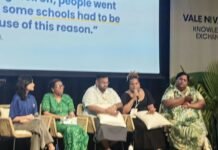
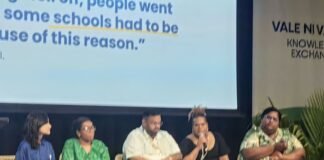
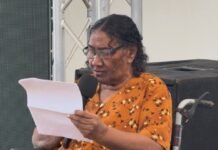
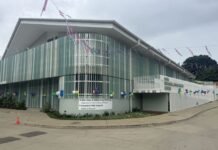
Speaking during a panel discussion on Partner Dialogue on Locally Led Adaptation and Nature Finance on the final day of Pre-COP31 at the Sofitel Resort, Denarau Island, on Thursday, KAWAKI Women Network Coordinator Dilly Maezama said many rural women struggle to access funding because of complicated application and reporting requirements.
“What we would like to see is a review of the funding conditions. The forms and paperwork required are often too complicated for our communities,” Ms Maezama said.
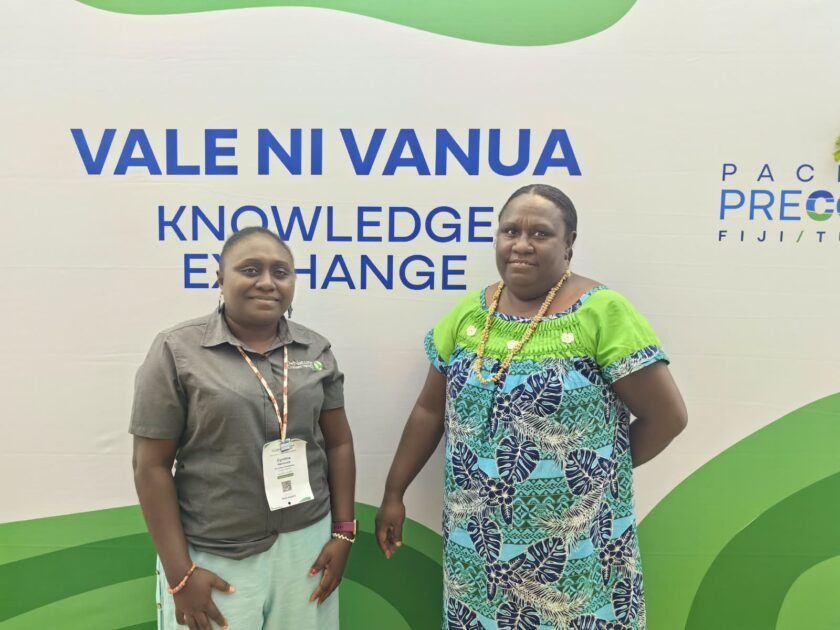
“The three communities we represent are very remote, and many of the women are not formally educated. However, they possess valuable skills, talents and traditional knowledge of natural resources.
“We ask donors and NGOs to rethink and simplify their funding requirements. Come down to our level, talk to us in Pidgin, listen to our experiences and accept simpler forms of reporting, including handwritten notebooks.”
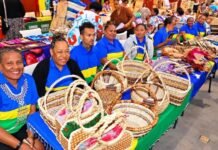
KAWAKI is a women-led conservation and cultural collective dedicated to protecting marine biodiversity, particularly the critically endangered hawksbill sea turtle within the Arnavon Community Marine Park (ACMP) in western Isabel Province.
Established in 2013, the network brings together women from three communities: Kia in Isabel Province, and Katupika and Wagina in Choiseul Province.
KAWAKI co-founder Marilyn Gedi previously received a Commonwealth Points of Light Award in recognition of her grassroots conservation leadership.
Ms Maezama said the three communities, despite their different cultures and languages, remained united through a shared commitment to conservation.
“Our main language of communication is Pidgin. We strive to understand one another, respect our cultural differences and work together for conservation,” she said.
She noted that environmental challenges continued to affect the communities, including changing sea currents and the overharvesting of natural resources.
Mining-related concerns were also raised in Katupika and Wagina. While mining activities have not yet commenced in Wagina, prospecting is currently underway in Katupika.
Meanwhile, the Kia community continues to face challenges associated with logging activities.
“These issues are often beyond our level and depend on decisions made elsewhere,” Ms Maezama said.
The Nature Conservancy, in partnership with the Arnavon Community Marine Park, is currently supporting the KAWAKI Women Network. The network has also received funding through the United Nations Development Programme (UNDP) Small Grants Programme to support waste management initiatives.
Source: Eddie Osifelo
NADI, Fiji