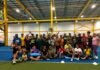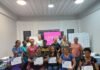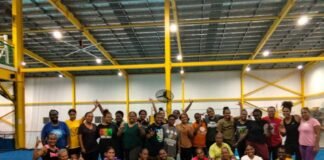


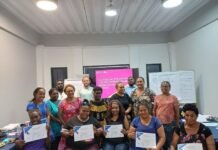

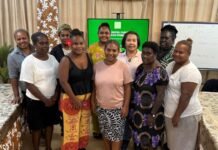

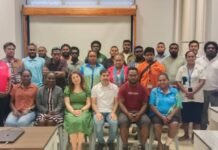

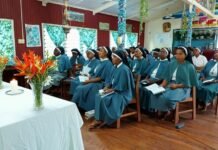


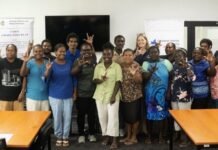





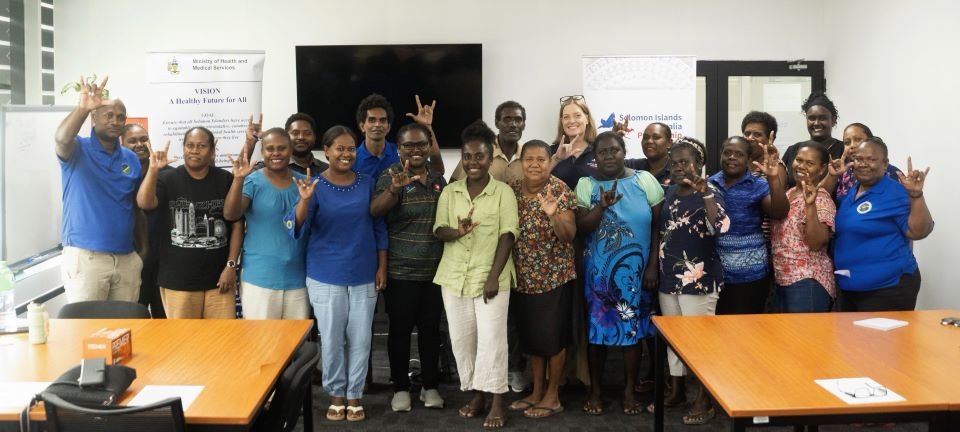
Deaf survivors and people who are hard of hearing will have better access to support services after health workers from the National Referral Hospital, Honiara City Council, Seif Ples and the Solomon Islands Planned Parenthood Association completed a two-day introductory sign language training in Honiara.
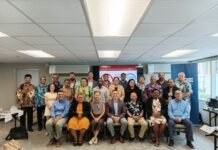
The training, delivered by the Solomon Islands Deaf Association (SIDA) and supported by Australia, equipped 40 frontline health workers with practical sign language skills to improve communication, with Deaf survivors and people who are hard of hearing. Participants learned the fundamentals of Solomon Islands Sign Language (SISL), including the alphabet, numbers, everyday vocabulary and practical conversations, before applying their skills through role playing scenarios based on real life healthcare settings.
In Solomon Islands, approximately 87 Deaf survivors and women who are hard of hearing seek health services for gender-based violence each year.
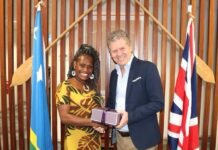
Acting Australian High Commissioner Andrew Schloeffel said every survivor deserves access to safe, respectful care and the support they need.
“It takes courage to seek support after experiencing gender-based violence, so it’s really important that hearing ability doesn’t prevent women from coming forward,” Acting High Commissioner Schloeffel said.
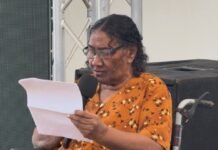
“This training, delivered by Solomon Islanders for Solomon Islanders, will help more women access the care they need.” Dr. Selma Mare Likaveke, Paediatrics Registrar at the National Referral Hospital, said the training had transformed the way she viewed inclusive healthcare.
“The experience changed my perspective on healthcare. I learned that inclusion is not only about treatment, but also about communication, respect, and making sure every person feels welcome and involved in their own care,” said Dr Likaveke.
“It helped me better understand the needs of people with disabilities, including those who are Deaf or hard of hearing, and gave me greater confidence to communicate in ways that make patients feel respected and understood.
“I now see that inclusive healthcare means treating everyone with dignity, regardless of age, gender or ability, and ensuring that no one is left behind.”
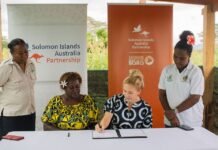
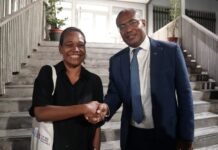
The first of two trainings was officially opened by Australia’s First Secretary for Health, Jemma Thompson, alongside the Ministry of Health and Medical Services’ (MHMS) National GBV Coordinator, Nashley Vozoto.
People with disabilities experience higher rates of gender-based violence globally and often face additional barriers when seeking healthcare and support. For Deaf survivors and people who are hard of hearing, communication barriers can prevent accurate assessment, timely treatment and appropriate referrals, meaning accessible communication is essential to delivering quality, survivor centred care.
The training forms part of Australia’s ongoing support to the MHMS to strengthen disability inclusive healthcare and ensure survivors of gender-based violence receive quality, accessible and survivor centred support.