












BY MIKE TUA
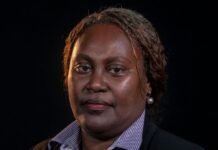
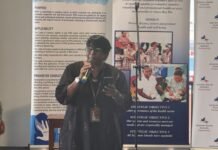
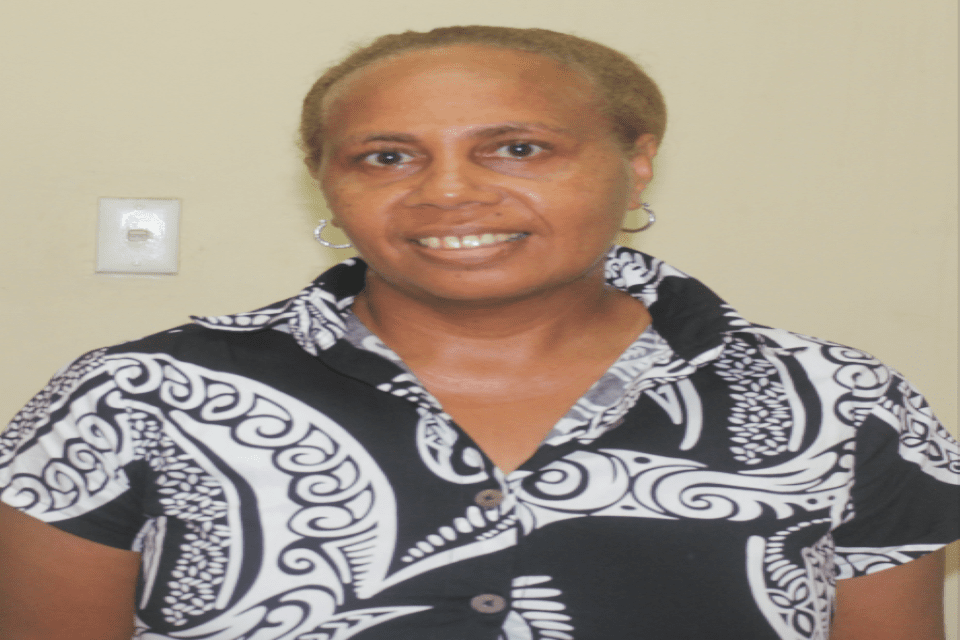
ROSEMARY Kafa is a nutritionist/dietician who professionally trained in human nutrition.
Through the course of her career Mrs. Kafa has worked as a clinical dietician at the Ministry of Health and Medical Services; she is currently the National Nutrition Coordinator of the Nutrition Unit in Honiara.
Her qualification and work commitment and passion over the last three years since 2012 gave her the opportunity to be designated as the national coordinator of the Nutrition Unit in the country.
Ms. Kafa holds a Masters in Science (Human Nutrition) and Bachelor of Public Health from Massey University, Albany Campus in Auckland, New Zealand.
Here is our interview done by Solomon Women’s Newspaper Reporter Mike Tua with Rosemary Kafa, the National Nutrition Coordinator of the Nutrition Unit of the Ministry of Health.
Solomon Women Newspaper (SWN): What’s your age?
Rosemary Kafa (RK): 42 years old
SWN: Why did you decide to pursue a career in nutrition and dietetics – tell us where your interest in the field began and how your career unfolded?
RK: My interest about nutrition started at High school. However since there were no course available in the country at that time, I applied for a vacancy and was accepted for an attachment as a nutrition trainee with the Save the Children Fund organization and also doing classes at the USP Centre in Honiara until I gradually went on for further studies overseas.
SWN: You’re now a National Coordinator of the Nutrition Unit, Ministry of Health. Is this where you envisioned you’d be when you started?
RK: Not really but because since I have other people before me I think they would be here for a long term to take up the leading role but as time goes on all of them went away to do other things so it left me here to take on the current leading role as a national nutrition coordinator.
SWN: Your experience as a national coordinator of the Nutrition Unit. How do you value your job career?
RK: I really love my job because it is very interesting field of study because you intend to know what you are eating and what your body is made up of consist of the different food (nutrient) you eat and it is one of the most important aspects of human health and life.
SWN: What has been your greatest professional success and biggest setback?
RK: To make to where I am now in my career is one of my biggest successes especially to where I can make important decisions and to determine what the specific future is for the Unit. There are lots of setbacks but one challenging one is the lack of human resource capacity because at the moment we only have five staffs trying to look after the nutritional needs of the whole country.
SWN: Who have been the biggest inspiration for your career and why?
RK: My colleagues who have gone before have inspired and encouraged me to go further in my studies to where am now and to do more in this field and hopefully to pursue my future PHD level of studies to promote my career.
SWN: What exactly do you do in the field of nutrition and dietetics and what are your daily responsibilities?
RK: Right now being the manager of the entire national nutritional program, I specifically look more on the planning, annual budget plan, monitoring implementation of the activities that we plan as part of the program and to provide report for the head of all health division of the Ministry of Health. I am still doing advocacy and promotion of healthy nutritional diets and also I want to do the technical part of things in order to avoid losing my clinical skills to deal with patients who need special nutritional diets.
SWN: On a basic level, what are the most important skills that your job demands?
RK: On the basic level I must have a good science background to know everything about the human body and how our body uses up food and also to possess a technical knowledge on how to develop a good communication skills to deal public awareness talks and also to communicate with patients.
SWN: What parts of your work do you enjoy the most and what are your greatest stresses at work?
RK: What I enjoy the most is going to the communities especially when doing technical trainings for other health workers, talking to people with diet related health problems like patient with diabetes. The most stressful part of my work is dealing with finance delays to facilitate our national program of activities in the country because sometimes things don’t happen according to our timing due to the financial delays.
SWN: What are some of the most challenging aspects of your job?
RK: One my major challenge is when you want to do things and see it happen but there are superiors at the highest level who want to say no to it (a conflict of interest) and obviously it’s like when you are hitting a break wall and sometimes it’s very discouraging for me.
SWN: You have a Masters’ Degree and a Bachelor Degree in Human Nutrition. How has this combination of degrees contributed to your professional success?
RK: In the technical part of my work I am absolutely confident with what I am doing in terms of my qualification and work experience as a nutritionist in the field of Human Science. At the moment I am still learning and I want to do more in other specific areas and if time permits I want to do further studies in nutritional medicine.
SWN: What is your best advice for people (students) want to start and build a successful career in Nutrition and Dietetics?
RK: First I want to encourage more young students to build an interest in whatever they eat and the source of where they get their food because you must have some kind of curiosity to investigate and learn more about science (bio-chemistry).