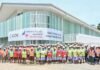


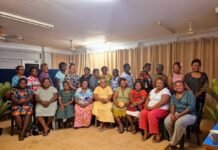


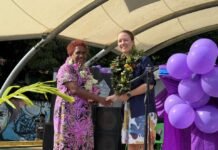




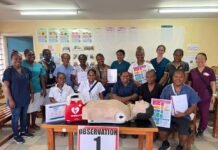
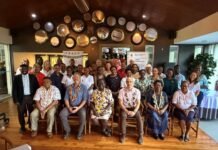
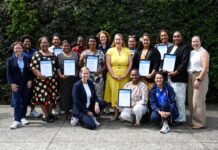
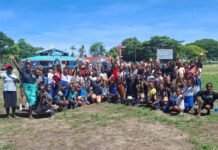


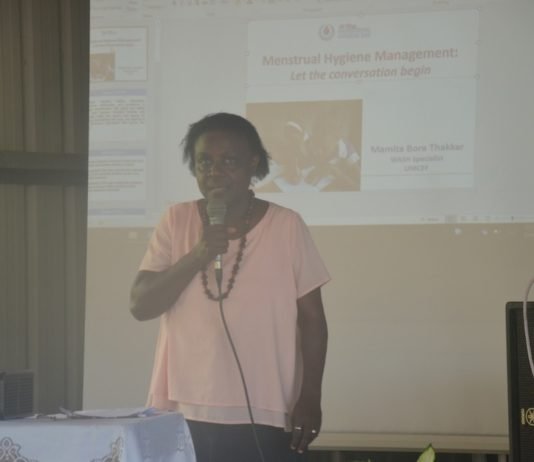
SOLOMON Islanders in Honiara have recently celebrated the Menstrual Hygiene Day. The objective of observing the day is to raise awareness of the challenges women and girls face worldwide due to menstruation and highlight solutions addressing these challenges.
The theme of this year’s Menstrual Hygiene Day is “empowerment”. The aim of the theme is to have a setting where women and girls can learn to take care of their body, health, mind and spirit during menstruation.
The theme is very relevant for Solomon Islands. Though menstruation is a biological and essential part of women’s and girls’ reproductive cycle, in Solomon Islands, menstrual management decisions are mostly based on people’s cultural belief rather than proper information. It remains a sensitive (taboo) subject that is rarely discussed. Also, various stigma and myths surrounding menstruation hinder women and girls’ rights.
According to the Ministry of Health and Medical Services (MHMS) National Adolescent Health and Development Program Coordinator and Supervising Program Manager for Reproductive & Child Health Department, Nancy Pego, it is absolutely important for Menstrual Hygiene Management (MHM) to be carried out within all schools in the country.
“It is very important since the study conducted in 2014 shows us that girls have to miss class because of no friendly facilities in schools, embarrassment, anger, fright, shame, and distraction during classes, punishment for visiting the bathroom and disrupted socialisation. All these are challenges that girls face during menstruation period.
“We wish that all schools in the country should have a standardized ablution facility with shower, sink, disposal bin and proper changing room for girls which should be a separate one for boys.
“I strongly think that the ministry of health should improve more on MHM within the schools in our country and to all female citizens in Solomon Islands,” she told Solomon Women.
Pego said Menstruation Hygiene Management in Solomon Islands is a new initiative now, but in Solomon Islands long time ago, it is practice through cultural norms and it’s a very sensitive issue to mention or discuss to girls and women or the family as a whole.”
“However, MHM is very poor in the way we care for women and girls since there are no proper facilities to wash themselves, their pads, washing of hands and disposing of pads even at their homes.
“This is because the topic is still a sensitive issue to discuss at home and in schools. Therefore, we must continue to build the capacity of teachers and supply resources to school on information Fliers and pamphlet’s on MHM. Teachers who have been trained on Family Life Education in their schools should roll this out to their own schools,” the Supervising Program Manager for Reproductive & Child Health Department said.
Meanwhile, she encouraged mothers in the country to take the responsibility in informing their daughters about menstruation before they actually experience it.
“This is very important for our girls and daughters to be well prepared ahead looking forward for that very important time.”
UNICEF and WHO have previously stated that an appropriate menstrual hygiene management (MHM) refers to women’s and girls’ access to clean menstrual management materials to absorb or collect blood that can be changed in privacy as often as necessary for the duration of the menstruation period; access to soap and water for washing the body as required; and having facilities to dispose of used menstrual management materials.
Pego said the Ministry of Health should improve more on MHM within the schools in our country and to all female citizens in Solomon Islands.
“I think that MEHRD, MWYCFA, NGOs and UN partners should support and implement recommendations on MHM in our country, Seek UN partners for support to improve MHM and put a budget during planning budget time this year 2018 for 2019, so that it can be inserted in the AOP (Annual Operational Plan) to support MHM programs.
“That in the Annual Operation Plan (AOP) for 2019-2023 for the Education Sector, they should include to build these standardized facilities and seek funding from UN partners like: UNICEF, WHO, UNFPA and DFAT apart from SIG as well.
“In the Annual operation plan (AOP) for 2019-2023 for the Education sector, they should include to build these standardized facilities and seek funding from UN partners like: UNICEF, WHO, UNFPA and DFAT apart from SIG as well.