











BY MIKE TUA
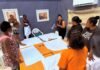
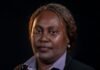
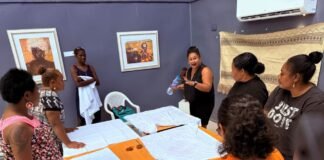
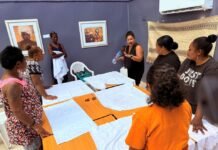
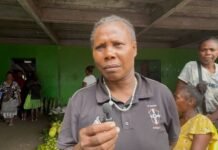
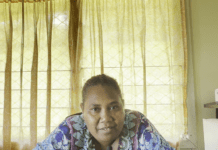
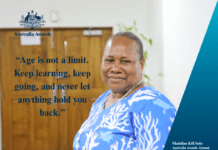
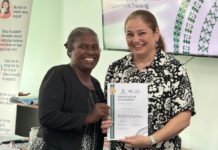
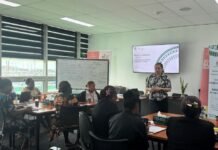
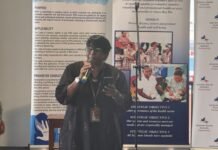
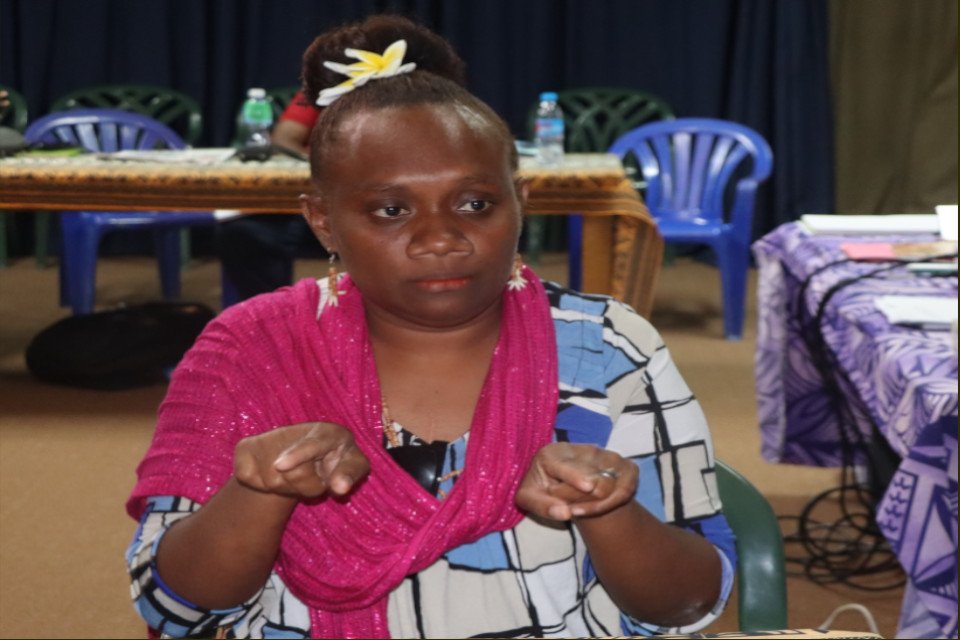
STANDING in front of the classroom and communicating with deaf students using her hands, the body, and eyes, head, and mouth is Nester Piko, a qualified sign language interpreter.
Nester, with a qualification in the field of Chaplaincy including a Bachelor’s degree in New Testament Studies, has been at the forefront of communicating to deaf and hard of hearing students of the Red Cross operated Special Development Centre (SDC) at Rifle Range in West Honiara since 2014.
Solomon Women finds out what has attracted her to become a certified Sign Language Interpreting for the deaf community in the Solomon Islands, including the experience she had and what’s she’s doing now.
“While studying at the South Pacific Missionary Training Centre, Lami, Fiji Islands from 2009 t0 2013, I had an opportunity to undergo my practical at a deaf gospel school. These experiences helped me more to see more clearly that they captured my heart and love for the deaf community.
“From my experiences, I was able to convince myself that this is my calling from God and later volunteered myself and studied to become a qualified translator and interpreter.
“I believe that God is behind my career and has a purpose and plan for me and I acknowledge His wisdom for allowing me to choose this career; I am passionate about my work and for me being a bridge between two languages.
“The deaf community in the country is close to my heart,” Nester said.
As a young woman with mixed ethnicity (mainly Temotu, Choiseul, and Isabel) she described her career as a blessing, “I am humbled to have that respect as a deaf interpreter, and to see how important that work is.”
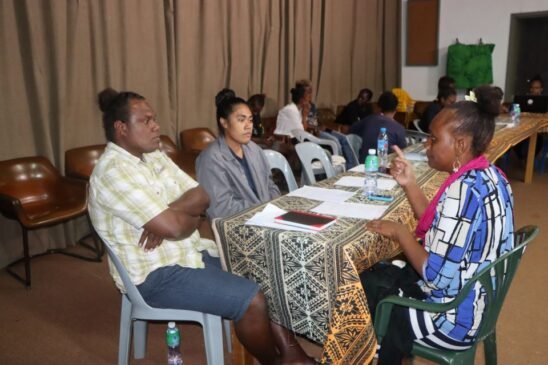
Nester’s experiences over the years have allowed her to stay focus and take on the challenges of teaching and working with the deaf community. Such experiences had taught her new lessons and strong guiding principles that have deeply influenced the personality she has become today.
“My job as an interpreter is quite challenging and you need to have a kind and generous heart, practice patience, apply the love of Christ (Jesus), and have passion for such job.
“These are the virtues and principles that have served me well and continue to guide me in both life and career.
“It is from this in-depth understanding and love for this community that keeps me motivated and going until now.
“I have to be confident at all times despite the challenges attached to my job as an interpreter. The only way I can manage these challenges is to believe that I can do anything through Christ who strengthens me, according to our Christian virtue.
“I love my job since I have a big heart for this community of people with hearing impairment; Deaf people are just like us (normal people); however they need extra special care and respect when it comes to one on one level communication.
“Deaf people or people with hearing impairment are very sensitive when it comes to communication and therefore we have to respect them at all times in terms of how we want to communicate with them,” she told Solomon Women.
Understandably, no one knows definitively how many deaf and hard-of-hearing children or adults are in the country. However, there are also only 16 certified sign language interpreters in the country and only three interpreters under the Special Development Center (SDC) in Honiara.
Despite this, the government’s education ministry only recognizes SDC as a learning institution for children with special needs whilst the hope to extend this service to the provinces is still a major challenge for the government.
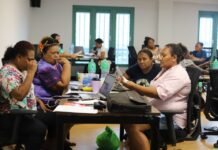
Currently, only three schools in the country are focusing on people with disabilities are SDC, San Isidro, and Bethesda. However, only SDC is the only school in the country that’s catering to the needs of children with a range of physical and intellectual disabilities.
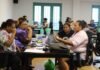
The staff of the Centre is dedicated to improving the children’s lives in the future and helping them to gain an education and some independence in life.
She strongly believed that apart from sign language interpreters, all teachers, and administrators working with the deaf society including parents and guardians need to learn and understand how to communicate with them.
“It’s important for the society especially public, parents and guardians of deaf people to know and avoid making deaf people feel rejected, and treat them as normal people or person.
“Although they are deaf but treat them as normal human beings. Stop criticizing them.
“Parents of the deaf should come to us interpreters so that we can teach them how to communicate rightly with their children back at their home,” Nester added.