




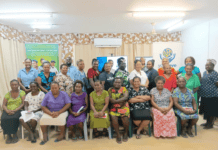

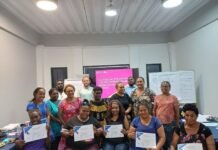



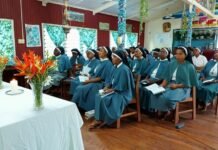










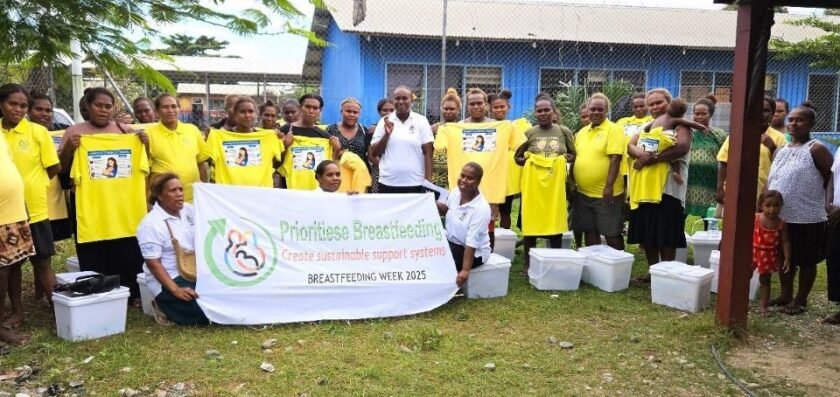
The Ministry of Health and Medical Services (MHMS), Nutrition Unit under the National Reproductive and Child Health Department, and Health Promotion, with support from the World Health Organization and UNICEF, celebrated the breastfeeding week (1st to 7th August) at Burns Creek clinic with antenatal mothers and postnatal mothers.
This year’s breastfeeding week theme is “Prioritise Breastfeeding: Create Sustainable Support System”
The theme emphasized the need for shared responsibility and collective action to protect, promote, and support breastfeeding in every setting.
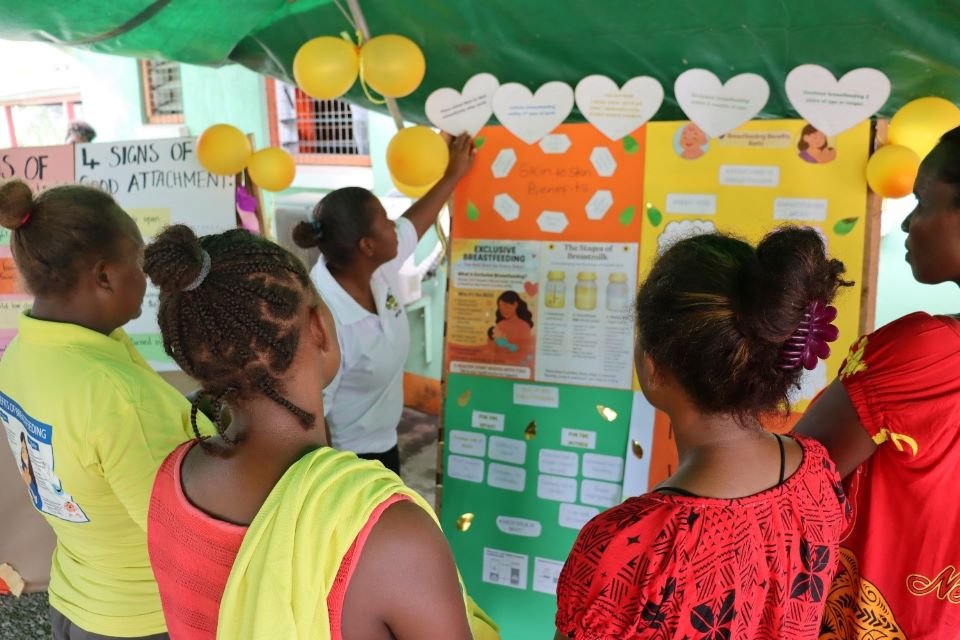
The Nutrition Unit celebrated the day by conducting breastfeeding awareness through the sharing of important key messages to the mothers and babies who came for antenatal and postnatal visits.
Important key messages shared are:
- Skin-to-skin contact immediately after birth to promote bonding and early breastfeeding.
- Initiating breastfeeding within the first hour of birth for the best start in life.
- Exclusive breastfeeding from 0 to 6 months – no other food or drink, not even water.
- Continue breastfeeding up to two years of age or longer, along with appropriate complementary foods.
- Frequent breastfeeding day and night as more milk is produced during the night.
- Allowing the infant to finish one breast before offering the other.
- Ensuring good positioning and attachment to support effective feeding and prevent discomfort.
- Responsive feeding – breastfeeding whenever the baby shows signs of hunger.
- Continuing breastfeeding during illness, for both mother and the infant.
- Ensuing mothers eat and drink to satisfy hunger and thirst.
In addition to individual practices, broader actions were discussed to ensure sustainable support systems for breastfeeding mothers. These included:
- Encouraging fathers, partners, mothers-in-law, and community members to provide emotional and practical support to breastfeeding mothers.
- Ensuring that all breastfeeding women have access to quality, accurate information, especially when visiting health facilities and engaging with trained health workers should they need support.
The celebration also highlighted the positive environmental impacts of breastfeeding. Breastfeeding is a natural, renewable food source that helps to:
- Reduce waste and pollution caused by formula production and packaging
- Lower land use and deforestation required for dairy and formula industries
- Promote water conservation as no water is required to prepare breastmilk, and
- Contribute to preserving biodiversity and a healthier planet for future generations.
Moreover, important benefits of breasting for babies are;
- breastmilk provides ideal nutrition for babies
- breast milk contains important antibodies that protects a baby against infection
- breastmilk is easily digested and efficiently used by the baby’s body
- breastmilk promotes healthy weight and development for babies
- breastfeeding reduces disease risk
- breastfeeding promotes well developed brain for that leads to smarter children.
- Breastfeeding for mother:
- breastfeeding helps lose pregnancy weight
- breastfeeding helps the uterus contract that reduce bleeding after delivery
- mothers who are breastfeed have a lower risk for depression
- breastfeeding reduces risks of having breast/ovarian cancers and obesity, and it saves time, energy and money.
Meanwhile, t-shirts with important breastfeeding messages and packs of baby covers, towels and clothes were distributed to the antenatal mothers and postnatal mothers at the end of the program.