




























BY JOY OFASIA
The Solomon Islands Women’s National Football Team has made history — and in doing so, lifted the hearts of football lovers and fans in the country.
On Saturday in Lautoka, Fiji, the team clinched their first-ever OFC Women’s Nations Cup title after a thrilling 3-2 victory over Papua New Guinea in the grand final. The win marks a major milestone in Solomon Islands football history, making them the fifth nation to win the prestigious regional tournament.
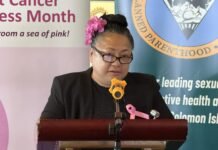
In a moving welcome ceremony held at the Solomon Islands Football Federation futsal hall on Sunday, Antoinette Wickham, representative of the Women’s Premier League Board, praised the players for their strength, unity, and determination.
“This win is more than just the result on the scoreboard,” Wickham said in her speech. “It is a testament to the strength, resilience, and rising talent of our women sitting right here in front of us today.”

The celebration was emotional, with families, fans, and football officials gathered to honor the team’s hard-fought journey. Wickham noted that the victory goes beyond football, serving as a beacon of hope and inspiration for girls across the country.
“You have shown that with teamwork, belief, courage, anything is possible. Beating a strong PNG side was not easy, but you have proved that Solomon Islands is a force in women’s football,” she said.
She also took the time to thank the families, clubs, and support staff who stood behind the players throughout their training and matches.
“Let this victory inspire our young girls across the country. Your dreams are valid, your future is bright, and the world is watching,” she added.